
Views: 0 Author: Site Editor Publish Time: 2026-10-01 Origin: Site


A plate can look flawless in a showroom and still create problems during breakfast service. Unstable stacks slow replenishment, rough foot rings mark neighboring plates, and decorative finishes may need different care from plain white ware. For hotel dinnerware, quality means more than a bright surface or an expensive material name. Porcelain can be an excellent choice because it combines a dense ceramic body with broad design possibilities. The useful question is whether a particular collection can support your property's actual handling, washing, presentation, and replacement needs. That requires checking the finished piece, not accepting the word porcelain as a performance guarantee.
Quick Answer: Yes, well-made porcelain is a good dinnerware material for many hotels. Choose it when the specific body, glaze, shape, and finish suit commercial service. Verify equipment compatibility and inspect multiple samples. Neither porcelain nor bone china is unbreakable, and a decorated plate may have different operating limits from an undecorated one.
Porcelain belongs to the ceramic family; ceramic is not a competing material on the same level. Stoneware, earthenware, and porcelain describe different ceramic bodies and production approaches. A comparison labeled porcelain versus ceramic can therefore hide the question buyers actually need answered: which finished body and design work in this dining operation?
Porcelain is generally valued for its dense body, low water absorption, and smooth finished surface. These characteristics can support repeated cleaning and a refined appearance. However, the body formulation, forming, firing, glaze fit, and final inspection all affect the result. Firing temperature alone does not reveal how a plate will behave when its rim hits a service trolley.
The body gives the piece its underlying structure. The glaze provides the food-contact surface and visible finish. A plate may have a sound body but an uneven surface, poorly finished foot, or decoration that needs careful handling. Equally, a glossy finish can conceal a shape that rocks on the table or stacks awkwardly.
Examine the eating surface under angled light. Look for cracks, exposed areas where a continuous glaze is intended, sharp irregularities, and defects that would impede cleaning. Turn the plate over and check the foot ring. A smooth contact area matters because the underside of one plate can contact the face of another in storage.
Whiteness and translucency can contribute to a collection's visual character, but neither is a standalone durability test. Colored porcelain may be an intentional design choice. A thicker hospitality plate may transmit less light than a thinner fine dining piece while remaining appropriate for its intended task.
For hotel dinnerware procurement, define quality in observable terms: level placement, acceptable glaze consistency, comfortable carrying, stable storage, suitable care instructions, and replenishment that matches the approved collection. These requirements turn a subjective impression into a usable purchasing specification.
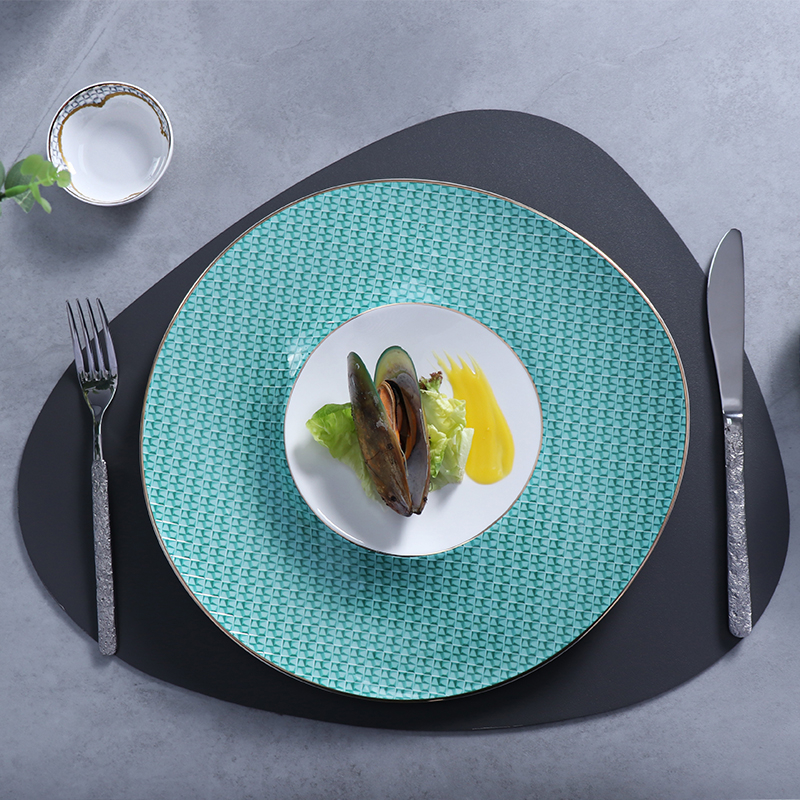
Material selection should follow the outlet's service model. A breakfast buffet, afternoon tea room, and tasting-menu restaurant may have different priorities even inside the same property. Buying one material for every outlet can simplify inventory, but it can also impose an unsuitable weight, finish, or plate profile on part of the operation.
Material | Reasons to consider it | What to verify | Possible service fit |
|---|---|---|---|
Porcelain | Dense body and varied shapes, colors, and profiles | Rim performance, glaze finish, stacking, and care limits | All-day dining, plated meals, and banquet programs |
Stoneware | Substantial feel and expressive surface possibilities | Actual weight, body absorption, finish maintenance, and batch variation | Casual outlets where the selected collection fits the menu |
Bone china | Refined appearance and potentially light construction | Body composition, edge design, decoration care, and handling | Afternoon tea and formal plated service |
Earthenware | Decorative variety and distinctive craft character | Body porosity, glaze integrity, and suitability for intensive use | Selected applications after product-specific assessment |
These are selection considerations rather than a universal strength ranking. A poorly matched porcelain shape may perform less satisfactorily than a well-designed stoneware piece in the same task. Compare collections of similar dimensions and intended use, and avoid using a household plate as a benchmark for a busy commercial outlet.
Rollin Porcelain's Hotel Bone China Plates combine green and white coloring with gold decoration. This gives buyers a specific visual direction to assess for formal hotel dining. Bone china should be evaluated as its own body category; the linked collection should not be treated as evidence of how every porcelain plate performs.
Place a decorated sample beside your glassware, cutlery, linen, and actual food. Check whether its pattern leaves enough visual space for the menu. Then establish finish-specific washing and heating instructions. Gold appearance alone does not establish whether the decoration contains conductive metal or whether microwave use is permitted.
If a property needs unrestricted interchangeability between outlets, a plain collection with confirmed equipment compatibility may be easier to manage. If formal presentation is the priority, decorated hotel dinnerware can be appropriate when staff can follow the required care routine consistently.
Durability has several dimensions. Resistance to a rim impact differs from resistance to surface wear, staining, or a temperature change. A broad claim such as durable porcelain leaves these questions unresolved. Identify the recurring stresses in your property before deciding which evidence matters most.
Breakfast buffet plates may encounter quick stacking and guest handling. Room-service pieces travel on trays and trolleys. Banquet plates move through staging areas in large quantities. Fine dining plates may be handled more deliberately but have thin or exposed edges. Each route creates different contact points.
Check the profile where staff grip the plate and where it contacts neighboring pieces. A reinforced or rounded edge can be a useful design feature, but it does not establish a measured chip-resistance rating by itself. Ask what the supplier's impact evaluation covers and whether the tested piece matches the proposed shape and size.
A gray line from cutlery may be metal transfer rather than a scratch through the glaze. That distinction matters: the cleaning response and rejection decision differ. Test any recommended cleaning method on a sample, and do not use harsh abrasives merely because a mark looks persistent.
Run approved samples through the property's normal washing setup. Record detergent, loading, and the condition of the finish after each observation period. This is a practical screening exercise, not proof of a multi-year lifespan. For decorated hotel dinnerware, pay attention to edges and pattern areas as well as the central eating surface.
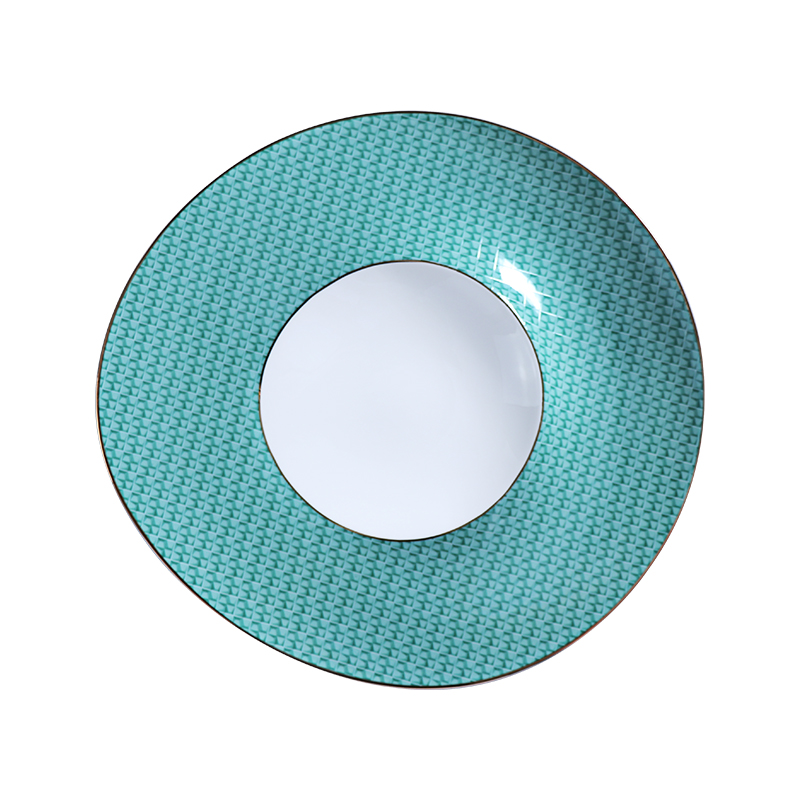
Microwave-safe, oven-safe, and suitable for a plate warmer are different statements. Confirm the actual use, temperature limits, and restrictions for each item. A high firing temperature does not authorize putting finished dinnerware under a grill or transferring it directly from cold storage to intense heat.
Thermal shock depends on the temperature difference, timing, body, geometry, and existing damage. Avoid inventing a universal safe transition. If your service requires unusual heating, describe that sequence to the supplier and request explicit suitability information before purchasing.
Some operations should consider alternatives for specific areas. Where venue rules restrict breakable ware, or where trays repeatedly strike hard surfaces, porcelain may be unsuitable for that zone. A strong hotel dinnerware program can contain more than one material without losing its visual coherence.
A single attractive sample cannot show whether the proposed order will remain consistent. Request several pieces of the same item so the team can compare dimensions, color, flatness, and stacking. Include the most frequently used shape and any decorated piece that introduces a separate care requirement.
Check | Practical method | Decision it supports |
|---|---|---|
Table stability | Place multiple pieces on a level surface | Whether rocking or uneven bases are acceptable |
Stack behavior | Build the intended working stack and remove pieces individually | Storage height, access, and handling suitability |
Service weight | Carry a representative loaded tray | Whether staff can manage the collection comfortably |
Menu fit | Plate representative meals at normal portions | Usable area, sauce containment, and presentation |
Wash compatibility | Use the normal approved rack and washing process | Finish care and operational compatibility |
Reorder consistency | Record item references and agree sample tolerances | How later replenishment will be accepted |
Write acceptance criteria before approving the order. Distinguish cosmetic variation from functional defects and agree how disputes will be handled. A retained reference sample helps both parties discuss future batches, but it does not replace agreed dimensions, finish requirements, packaging, and inspection procedures.
Consider initial cost, freight, storage, replacements, and any extra handling required by the finish. Use your property's own breakage and retirement records where available. A higher purchase price only represents better value if its service performance, presentation, or replacement terms justify the difference.
Track losses by item and outlet. Record whether retirement followed chips, cracks, decoration wear, disappearance, or a menu change. This separates product-related concerns from handling problems and shows which hotel dinnerware items consume the replenishment budget.
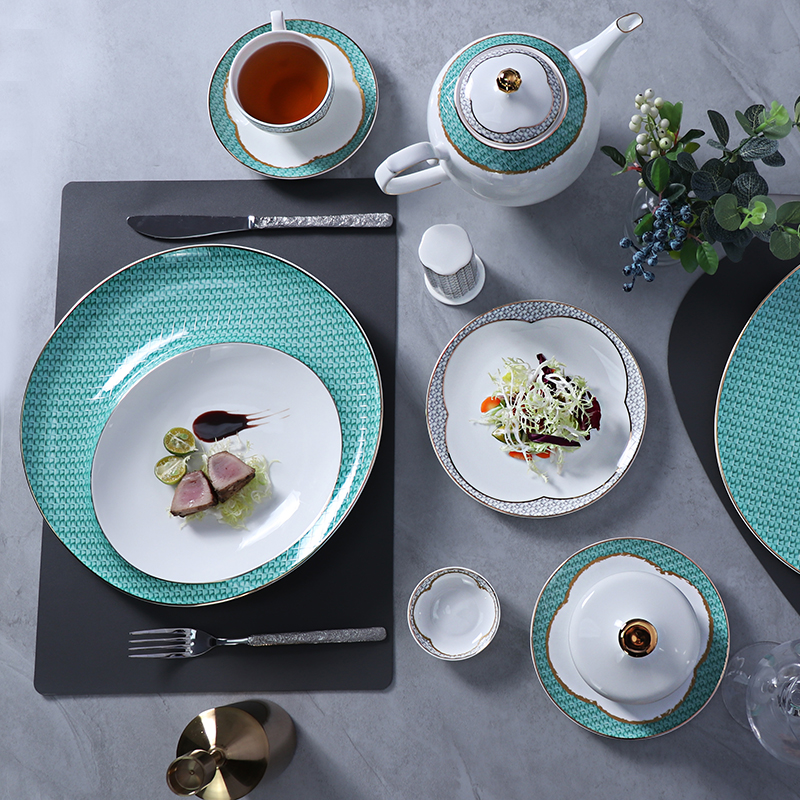
Replacement availability deserves a written discussion. Ask whether individual items can be reordered, how repeat batches are matched, and what happens if a shape or decoration is discontinued. Do not assume that a collection will remain available indefinitely because it is currently offered.
Keep commercial claims precise. Food-contact documentation should correspond to the actual body and decoration intended for the destination market. Material names, catalog wording, or a general company certificate do not settle every item-specific requirement. Resolve the documentation scope before the bulk order becomes difficult to change.
Finally, share the approved handling instructions with stewards and service staff. Manage stack height, remove damaged pieces, and investigate repeated contact points. Good porcelain quality and a suitable workflow reinforce one another; neither can fully compensate for an unsuitable design or uncontrolled handling.
Porcelain is a strong candidate for hotel dinnerware when the finished collection fits the outlet's menu and operating routine. Judge the body, glaze, edge, decoration, and replacement plan together. Approve multiple samples under representative service conditions, and treat special heating or washing claims as item-specific questions. Rollin Porcelain is a ceramic tableware manufacturer and supplier with porcelain and bone china options for hospitality. The sensible purchasing decision is the collection that combines the required presentation with manageable care and consistent replenishment, rather than the piece with the most impressive material label.
Yes, if the combination is intentional and looks coherent under the outlet's lighting. Compare actual pieces before ordering. Small shade differences can become more noticeable when plates are stacked at a buffet or arranged together for a formal setting.
There is no universal replacement age for a porcelain plate. Retirement should follow condition, suitability, and your inspection policy. A sound older piece may remain useful, while a newly purchased piece with a crack or sharp chip should leave service immediately.
A tapping sound is not a reliable purchasing test on its own. Shape, thickness, and how the piece is held affect the sound. Use visual inspection and supplier testing information rather than relying on an informal ring test to certify quality.
Keep damaged ware out of food service and prevent it from returning to active stock. If a venue retains a piece for display, handle sharp edges appropriately and identify it clearly. Repairs do not automatically restore food-contact or service suitability.
Not necessarily. Decorations, handles, shapes, and additional components can create different restrictions within one collection. Record care information by item rather than assuming the dinner plate's instructions apply to cups, bowls, and serving pieces.
