
Views: 0 Author: Site Editor Publish Time: 2026-10-22 Origin: Site


A cafe's dinnerware may need to serve a pastry at opening, a brunch dish at noon, and a dessert beside coffee later in the day. Buying a visually coordinated set is easy; buying one that fits small tables, limited shelves, and a busy washing routine takes more planning. Porcelain dinnerware for cafe service should connect the venue's design with this changing workload. For a 2026 purchase, prioritize a coherent palette and a compact group of useful shapes over a large collection of occasional pieces. The result should remain practical when the menu changes and when the cafe needs replacement stock.
Quick Overview: A commercial cafe set is a coordinated selection of serving functions, not a fixed retail box. Build around the food and drinks you actually sell, confirm table and equipment fit, and add visual accents selectively. Warm neutrals, soft whites, and textured details are styling options to evaluate, rather than performance guarantees or mandatory 2026 choices.
A boxed set can appear complete while failing to support a cafe's menu. It may include bowls that remain unused and too few of the small plates needed for pastries. Start with a service map that separates everyday functions from occasional requirements, then identify which functions can share one item.
A practical cafe dinnerware program might need a pastry plate, a larger food plate, and a bowl for dishes that require depth. These are illustrative roles, not a prescribed list. A drinks-led cafe with packaged snacks may need very little food ware; an all-day kitchen may require several additional formats.
Test cross-use carefully. One medium plate may suit toast, sandwiches, and cake, but the portions and accompaniments determine whether that substitution works. A sauce-heavy brunch dish may need a different profile from a dry pastry even if their outside dimensions appear similar.
For porcelain dinnerware for cafe menus, specify the useful center and depth alongside diameter. Wide rims can create visual space but reduce the working area. A shallow coupe can suit a compact presentation, while a deeper bowl may contain dressings or sauces more effectively. Use actual portions to make the comparison.
Cups and saucers need their own compatibility checks. Check the cup's foot against the saucer recess, room for a spoon, and handling with a hot drink. A visually matching saucer is not automatically a secure fit for every cup in the same color family.
Check whether the intended cup fits the coffee machine, service trays, and wash racks. Record practical fill volume rather than relying only on brimful capacity. Cafe dinnerware should support consistent drink recipes as well as attractive table settings; beverage portions should not change merely to fit a newly selected vessel.
Modern cafe styling can use warm whites, grey neutrals, muted colors, or selected textured surfaces without sacrificing a coherent table. Treat the year as a purchasing horizon: will the palette remain useful as the menu, furniture, and promotional photography change? A trend label cannot answer that question for an individual venue.
A restrained base can support many food colors and simplify later additions. Accent pieces might distinguish a signature dessert or a seasonal special while the high-volume plates remain visually adaptable. This also allows the cafe to change part of its presentation without replacing every item.
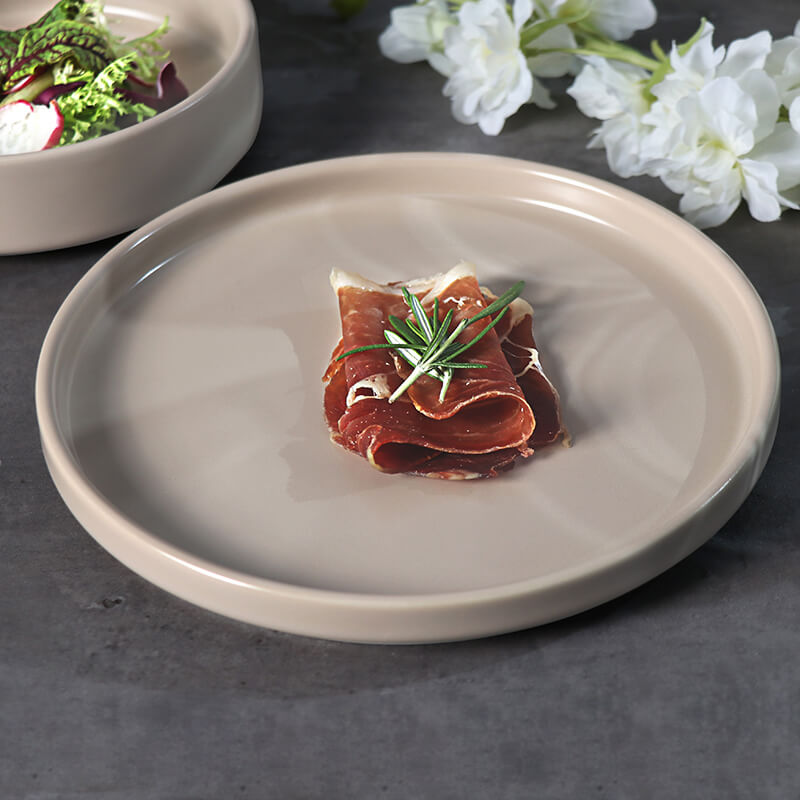
Rollin Porcelain's Warm Grey Porcelain Plates offer a modern minimalist direction for a neutral food-service base. Assess the proposed plate against cafe portions, table dimensions, and storage before assigning it to the set. Its hospitality application does not establish that every size or service sequence suits a compact cafe.
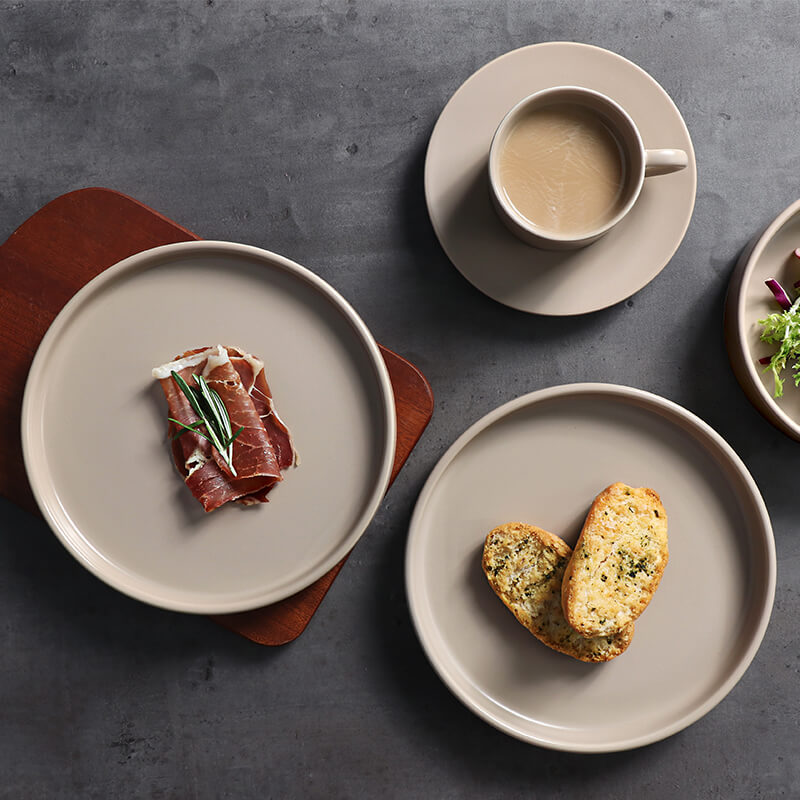
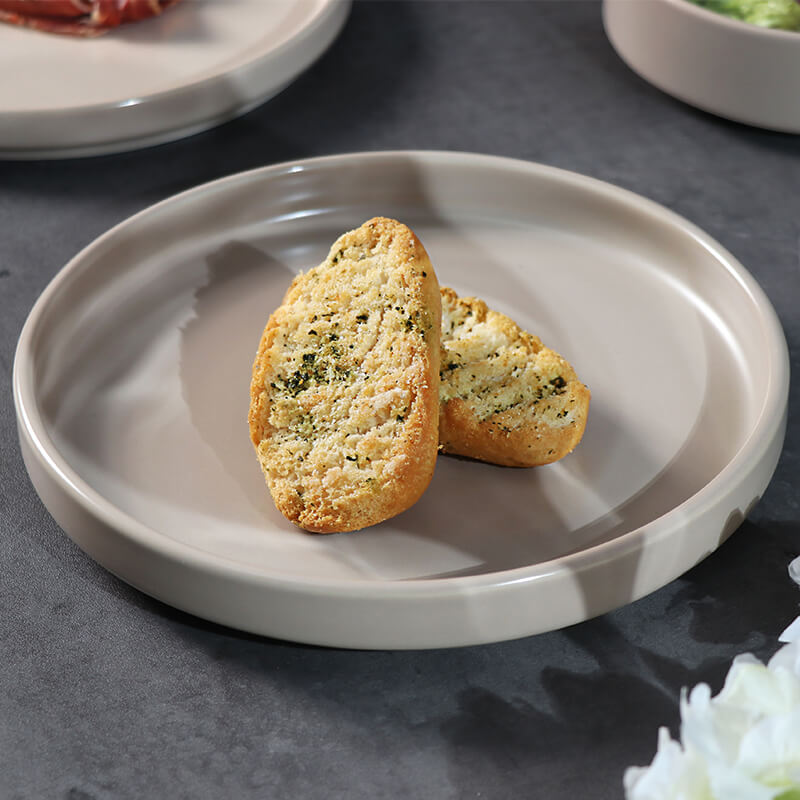
Compare the neutral tone with pale pastries, browned toast, green salads, and chocolate desserts. Also check the effect of the table surface beneath it. A grey plate on a grey tabletop may create less separation than expected, while a warm neutral can look different under daylight and evening lighting.
A subtle rim detail may add character without interfering with the eating surface. Texture across the whole plate introduces a different question: can utensils move comfortably, and can the surface be cleaned through the normal process? Examine samples where food and cutlery will contact them.
Styling direction | Useful application | Check before ordering |
|---|---|---|
Warm white or cream | A quieter base for mixed food colors | Shade consistency against existing cups and bowls |
Warm grey | A restrained contemporary presentation | Contrast with food and the tabletop |
Muted color accents | A selected dessert or signature menu item | Flexibility for later recipes |
Textured edges | Detail around an open food area | Cleaning access and contact during stacking |
Angular shapes | A specific geometric design concept | Corner exposure, rack fit, and table footprint |
Do not assume square pieces save more space than round pieces. Compare their actual footprint in the relevant shelf and rack arrangement. The shape that looks efficient in a photograph may use more space when clearance and handling are included.
Similarly, a natural-looking glaze does not establish an environmental benefit. If sustainability is part of the cafe's procurement brief, evaluate evidence relevant to production, service life, packaging, or transport separately. Color and texture describe appearance; they do not prove a lower environmental impact.
Porcelain dinnerware for cafe operations must fit the venue's smallest recurring setting, not only a spacious demonstration table. Customers may need room for a drink, food, cutlery, a phone, and a shared dish. The useful plate is one that makes the normal meal comfortable in the actual space available.
Arrange your common order combination on the smallest table. Include two customers if that table usually seats two. Check that cups are accessible and that plates do not extend awkwardly into neighboring settings. A modest reduction in plate footprint can be more useful than selecting the most visually dramatic shape.
Try carrying the same combination on the normal tray. Include the saucer and any small side dish. Look for crowding, unstable positioning, and difficulty setting items down. These tests show whether the proposed cafe dinnerware suits the service method rather than just the food.
Count pieces in a representative stack and measure its full height. Inspect whether the base and rim allow predictable nesting. Plates that bind together or lean at working height can make a small storage area harder to use despite a compact individual profile.
Check each proposed shape in the normal wash rack. Larger bowls may consume more space than expected, and closely nested plates may require careful separation. Match the loading method to equipment instructions and the product's care guidance rather than improvising around an incompatible shape.
At the busiest point, a cafe may have enough plates overall but too few clean ones ready for service. Establish how long an item is unavailable between serving and returning to clean storage. Include clearing, waiting, washing, drying, and movement back to the counter.
Buying additional stock can help when circulation is the constraint, but it cannot fully solve unsuitable racks or a slow clearing process. Before expanding the set, identify which stage creates the shortage. Porcelain dinnerware for cafe service should be planned alongside workflow, not used to hide a workflow problem indefinitely.
Calculate quantities by item. The small plate used for nearly every pastry may need more stock than the larger plate used only for a few lunch dishes. Cup requirements may follow a different pattern from food plates, especially when drinks remain on tables longer.
For illustration, suppose a cafe serves 40 small-plate orders per hour during a rush and each plate remains unavailable for an average of half an hour. That suggests about 20 plates circulating under steady conditions, before adding staged stock, burst demand, and a reserve. These are hypothetical planning inputs, not a recommended stock level.
Check the result against the busiest observed interval. Order bursts can exceed an hourly average, and some plates may remain on tables much longer. Add a reserve based on the cafe's uncertainty and replenishment conditions rather than applying an unexplained universal multiplier.
Verify the exact dishwasher, microwave, warmer, and oven permissions relevant to the proposed item. These are distinct use conditions. A porcelain body is not automatic authorization for every heating method, and decorated items can introduce additional restrictions.
Record instructions where staff can use them. If some cafe dinnerware needs separate treatment, include the time and storage implications in the selection decision. A finish that depends on a routine the cafe cannot maintain is unlikely to remain a satisfactory purchase.
Procurement check | Information to retain | Future use |
|---|---|---|
Item definition | Shape, material, size, color, and reference | Accurate reordering |
Sample acceptance | Agreed appearance and functional criteria | Comparing repeat batches |
Quantity model | Demand, turnaround, and contingency assumptions | Updating stock as trade changes |
Care limits | Approved washing and heating conditions | Training and equipment changes |
Replacement terms | Minimum repeat quantities and expected availability | Budgeting and reorder timing |
Compare ownership cost across the complete set. Include shipping, reserves, replacements, shelf use, and any special care. A low unit price is less helpful if the cafe must buy unwanted pieces to replace a frequently used plate or cannot store the minimum repeat order.
Keep a physical reference sample and label reserve cartons by item. Introduce new batches gradually enough to compare color and fit before all reserve stock enters circulation. If a collection changes, consider whether a compatible addition can preserve the set's visual logic without forcing a full replacement.
Review the set after menu or equipment changes. Adding brunch, changing cup recipes, or installing different racks can alter requirements substantially. A 2026 cafe dinnerware purchase should create a flexible foundation rather than lock the venue into assumptions that are already likely to change.
Choose porcelain dinnerware for cafe service by defining useful serving roles, then balancing appearance with table space, washing, and replenishment. Warm neutrals and selected accents can create a modern 2026 presentation, but the strongest set is one that remains coherent through menu changes and daily wear. Rollin Porcelain is a ceramic tableware manufacturer and supplier offering porcelain hospitality options. Assess each proposed item through actual portions and representative handling before ordering. A compact, adaptable set with clear care and reorder information gives cafe buyers a practical basis for maintaining presentation without accumulating unnecessary stock.
Yes, if the differences are intentional and the cups meet consistent drink and handling requirements. Check saucer compatibility separately. A coordinated palette can unite different shapes without making every beverage vessel identical.
Count orders that actually use porcelain rather than all sales. Takeaway trade may still affect clearing and washing capacity indirectly if the same staff handle both channels. Keep that operational effect separate from the number of plates circulating.
It can be sufficient for a limited dry-food menu if portions fit comfortably. A cafe serving sauced meals or shared dishes may need other profiles. Test representative orders before simplifying the program to one size.
No. Replace pieces based on condition and suitability, and update the visual direction selectively when needed. A stable base collection lets the venue introduce a new accent without retiring sound stock simply because the calendar changes.
Choose pieces with tested uses across both menus and plan stock for the busier period. Keep presentation rules consistent. Where breakfast creates a large wash backlog, account for the delay before those pieces become available for afternoon service.
